October 5, 2026
Meta adds parental oversight to Meta AI app
Meta is giving parents oversight into how their kids are using its artificial intelligence chatbots, with new parental supervision controls for Meta AI rolling out beginning today.
October 5, 2026
Meta is giving parents oversight into how their kids are using its artificial intelligence chatbots, with new parental supervision controls for Meta AI rolling out beginning today.
Meta is giving parents oversight into how their kids are using its artificial intelligence chatbots, with new parental supervision controls for Meta AI rolling out beginning today.
Given the rising concerns about using AI as an advisor, and even a companion, this could be a valuable addition for assurance and safety.
As explained by Meta: “By turning on supervision, parents and guardians will be able to see the topics their teen has been asking [Meta AI] about over the past seven days, but not the conversations themselves.”
This should ensure that parents will see if their kids are asking about topics that could be of concern. It could also prompt parents to talk to their kids about AI engagement.
“Parents who want a more restrictive AI experience for their teen can also switch from the default 13+ setting to the Limited Content setting, which further limits the kinds of conversations their teen can have in the Meta AI app,” Meta said.
The update is an expansion of the parental overview tools that Meta added in April, which provided insight for queries shared in AI elements within Meta’s apps.
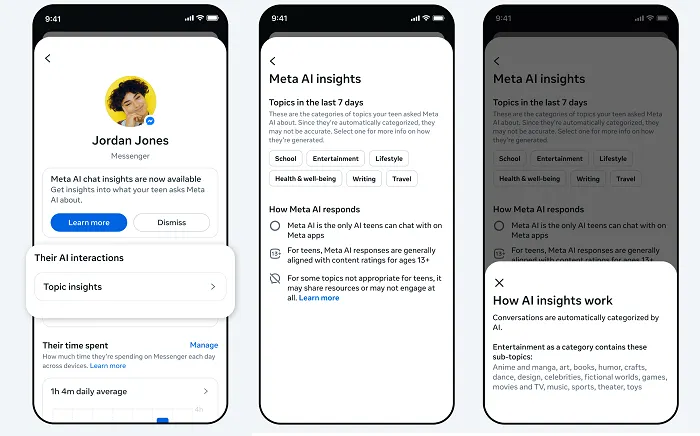
This update should ensure that the dedicated Meta AI app is also included within parental oversight controls. This could also extend to usage of Meta’s Muse agents, if Meta ever decides to make those accessible to people under age 18.
Presumably, lowering age restrictions is part of Meta’s broader goal with Muse, and is within the scope of the company’s mission to bring personal superintelligence to everybody. Providing parental supervision could facilitate this expansion, though even with additional oversight, it could be difficult to manage how AI chatbots influence teens’ decisions.
According to reporting from The Conversation, many teens are already turning to AI bots for companionship, emotional support and mental health advice. In addition, Pew Research data showed that 57% of U.S. teens have used AI chatbots to search for information, while 54% have used AI to assist them with schoolwork.
The rising reliance on AI could lead to a range of problems with misinformation, confirmation bias, cheating in school and more.
Having insight into the topics being discussed will be helpful for parents, but it may not be enough to mitigate the damage AI could do to developing minds.
Get the free daily newsletter read by industry experts


The key to maximizing a social media marketing strategy is to ground the approach in purpose.

For months, we’ve been tracking Elon Musk’s $44 billion deal with Twitter. Now that the deal is done, we watch as the Musk-Twitter era begins.
Subscribe to Social Media Today for top news, trends & analysis
Sign up for the free newsletter.
Thanks for signing up! Please keep an eye out for a confirmation email from [email protected] To ensure we make it into your inbox regularly, add us to your allow list, mark us as a safe sender, or add us to your address book. Check out more from





Get the free daily newsletter read by industry experts

Want to share a company announcement with your peers?
The key to maximizing a social media marketing strategy is to ground the approach in purpose.
For months, we’ve been tracking Elon Musk’s $44 billion deal with Twitter. Now that the deal is done, we watch as the Musk-Twitter era begins.


